Home / Selection 2026/2027

How places were chosen, and how to check it yourself

The rubric, a calculator for your own score, and every mark given on both lists, all on one page.

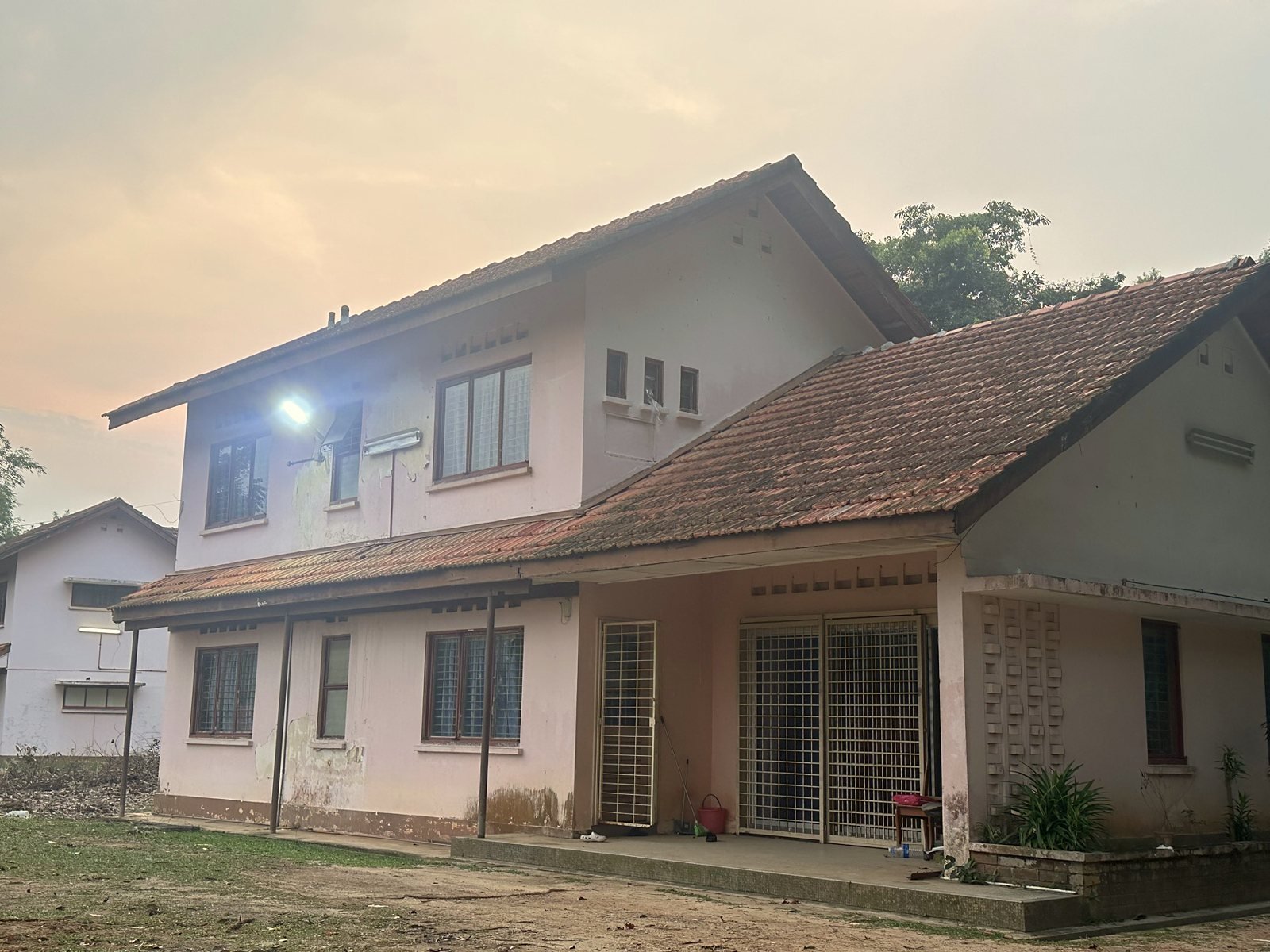
RKS 5

At a glance

Fifty beds, and far more people who needed one.

Results went out on Wednesday 19 August 2026. Every mark was given against a rubric published before applications opened, and nothing below has been rounded or trimmed.

283applications on both lists
50places, 25 for women and 25 for men
69.4cut off on the women's list, from 215 applications
56.0cut off on the men's list, from 68 applications

Read the full public report →

The measure we use instead

Income measured against what that household actually needs.

Lembaga Zakat Selangor publishes a table giving the monthly cost of each kind of household member: a working adult, a child in school, a dependant at university, someone registered OKU. Add up the people in a household and you get the minimum that household needs each month. Divide the household income by that figure and you get the nisbah. Below 1.00 means the household earns less than it needs. We did not invent those component figures and we cannot adjust them for anybody, which is exactly why they are the ones we use.

The published table is at zakatselangor.com.my. Every component we use is reprinted on the rubric page, and the calculator shows the sum line by line so you can add it up yourself.

The full component table

The whole thing at a glance

Six criteria. 100 marks. No opinion anywhere in it.

Every mark comes out of a number or a fixed choice you gave in the form. No committee member can add a mark to anyone, including their own friends, and there is nothing on this page a panel decides by judgement.


Listed heaviest first here. On the rest of the page they run in their published order, which is the order the form asks about them.

Nothing here is sent anywhere

This page has no submit button, no account and no server behind it. Every figure you type stays in the browser tab and is gone when you close it. Nothing is saved to this device, nothing is sent to JKRKS, and JKRKS cannot tell that you used this page or what you put in it. There is no analytics on this site at all.

It also asks for nothing that identifies you. No name, no matric number, no identity card number, no eKasih number, and no box to describe your situation in. If you want to check the claim, the whole file is at assets/js/kalkulator.js and it is about 200 lines.

Your household

Everyone who lives on the household income, including you and including anyone away studying. These figures build your had kifayah.

Count each person once, in one box only

  • The head of the household is the parent or guardian who heads it: your father, your mother where he has died or has left, or your guardian where neither parent is there. That person is the one already counted for you.
  • A brother aged 20 who studies at an IPT goes in the IPT box, and nowhere else, even if he also has a job. His pay still counts in the income figure below.
  • A parent who works goes in working adults, and a parent who does not goes in non working adults. When both parents work, one of them is the head and is counted for you already, so the other one is the 1 you enter.
  • The OKU, chronic illness and childcare boxes do not add people. They add cost for someone already counted above, the head of the household included.
Before any deduction. Every earner at the family home added together, both parents if both of them work. Your own allowance, PTPTN and any scholarship are counted separately, under the third criterion. If it changes month to month, use a normal month.
Not counting the head of the household, who is already counted.
Grandparents who do not work are counted here. LZS publishes no separate figure for an elderly dependant. Not the head of the household, who is counted for you whether they work or not.
University, polytechnic or college. Count yourself.
In school, not at an IPT.
 
Anyone in the household, including you, including a parent, and including the head of the household. This raises what the household needs, and is separate from the last criterion.
A condition needing repeated treatment.
For anyone aged 12 or under. Counted once, not per child.
Including you and including the head of the household. This is only used to check the boxes above add up. It carries no marks.
The form asks this. It carries no marks under this version of the rubric, and the working below says so rather than leaving you guessing.

1 people described in the boxes above

See how this is marked 30 marks
  • Nisbah marks
  • Below 0.5030
  • 0.5030
  • 1.0022.5
  • 1.5015
  • 2.007.5
  • 2.50 and above0

A ratio between two rows is marked on a straight line between them, so 0.75 scores 26.25 and not 30. Nothing rounds to your advantage or against you.

Assistance the household holds

Only the strongest one counts, so pick the highest that applies rather than adding them up. If you hold none, the mark is read from the income you entered above.

See how this is marked 16 marks
  • Status marks
  • Household registered on eKasih16
  • JKM recipient: Bantuan Anak Pelajar, Bantuan Kanak Kanak or Bantuan OKU14
  • Zakat education assistance13
  • Household receiving Sumbangan Tunai Rahmah11
  • None of the above, household income below RM2,56010
  • None of the above, RM2,560 to RM3,4399
  • None of the above, RM3,440 to RM4,3098
  • None of the above, RM4,310 to RM5,2497
  • None of the above, RM5,250 to RM11,8193
  • None of the above, RM11,820 and above0

The four assistance lines outrank every income line, so a household on eKasih scores 16 whatever its declared income says.

You
Family allowance, PTPTN spread across the months, and any scholarship living allowance. Do not count what you earn from part time work.
See how this is marked 14 marks
  • A month marks
  • Under RM30014
  • RM300 to RM49911
  • RM500 to RM6999
  • RM700 to RM8996
  • RM900 to RM1,1993
  • RM1,200 and above0

What you earn yourself from part time work is not counted here. Nobody is marked down for working.

Open Google Maps, search your family home's town, get directions to Universiti Malaya, and read the kilometres. We check it the same way.
See how this is marked 18 marks
  • One way marks
  • The journey crosses the sea: family home in Sabah, Sarawak or Labuan18
  • 250 km or more by road15
  • 120 to 250 km12
  • 75 to 120 km10
  • 50 to 75 km8
  • 35 to 50 km6
  • 20 to 35 km4
  • 10 to 20 km2
  • Under 10 km0

Open Google Maps, search the town your family home is in, get directions to Universiti Malaya, and read the kilometres. That is the number. We check it the same way, from your town or postcode, never from your house number. The three bands above 75 km are three marks apart while the commuter bands are two, because the difference at the far end is a difference in kind and not in degree: Johor Bahru, Alor Setar and Kota Bharu are 330 to 470 km and mean home at semester break, Melaka and Ipoh are 145 to 205 and mean home on a long weekend, and Sabah, Sarawak and Labuan mean no journey home at all short of a flight, with no fallback in the peninsula if the bed does not come through. The top band names the sea rather than the aircraft so that it is checked against your address document and cannot be claimed by anyone else. A distance that falls exactly on a boundary takes the higher mark.

The strongest line that applies. Only one is counted.
See how this is marked 16 marks
  • Situation marks
  • Orphaned of both parents16
  • Under a guardian or an institution rather than a parent13
  • Single parent, through death, divorce or desertion12
  • Both parents present, neither working, and no pension12
  • One parent unable to work through disability or illness9
  • You contribute income to the household7
  • Both parents present and supporting you0

The first block already measures how large your household is. This one asks a different question, and the two are marked separately on purpose.

About you, not your household. Your household's OKU and chronic illness are counted further up.
See how this is marked 6 marks
  • Situation marks
  • You are registered OKU with JKM6
  • You have a chronic condition needing repeated treatment5
  • Your family home was damaged by flood or fire in the past 12 months4
  • None of these0

Each of these produces a numbered document, which is the only reason it can be marked at all.

Your estimate

0.0 out of 100

Updates as you type. Nothing is submitted.


What this is not

An estimate, worked out from figures only you have seen. Your real mark is calculated from what you enter on the application form and checked against the documents you upload with it. Where a document does not support what was declared, the declaration is dropped and the mark falls. So this number is as accurate as the figures you just typed and no more.

A high estimate is not an offer, and a low one is not a reason to skip applying. There are two ranked lists and neither cut off is known until every form is in.

How to read the chart

Each column is a band of ten marks. The dashed line is the cut off.

The columns

Ten columns, left to right, from 0 to 100 marks. The height of each one is how many applications on that list scored in that band. Tall in the middle means most people scored near the middle.

The dashed line

The cut off. Every application to the right of it was offered a place and every application to the left of it was not. It sits where it sits because that is where the places ran out, not because of a target.

Two charts, not one

Women and men are ranked on two separate lists with 25 places each, so each list has its own distribution and its own cut off. Your mark is only ever compared with the list you are on.

The distributions

Both lists, in full.

Women's list

25 places

215

Applications

85.6

Highest mark

45.0

Median mark

7.0

Lowest mark

See these figures as a table
  • Band Applications
  • 0 to 93
  • 10 to 1926
  • 20 to 2934
  • 30 to 3929
  • 40 to 4931
  • 50 to 5937
  • 60 to 6931
  • 70 to 7916
  • 80 to 898
  • 90 to 1000

Men's list

25 places

68

Applications

79.5

Highest mark

48.3

Median mark

12.0

Lowest mark

See these figures as a table
  • Band Applications
  • 0 to 90
  • 10 to 1910
  • 20 to 2911
  • 30 to 396
  • 40 to 499
  • 50 to 5911
  • 60 to 6914
  • 70 to 797
  • 80 to 890
  • 90 to 1000

Check your own result

If you applied, the result page shows your total out of 100 and your mark on each of the six criteria. Only you can open it.

Check your result →

Find your own mark

Type the mark from your result and see where it sat.

The portal above gives you one number out of 100. Put it in here and this tells you which band it landed in, how many applications were in that band, and how far it was from the cut off on your list.

Nothing you type here leaves your phone. It is not sent to JKRKS, not stored, and not counted. The page cannot tell that you used it.

The single total from the portal above, before any correction.

Applicants are ranked separately, so this decides which chart you are read against.

Enter a mark above and your position appears here.

And then

A no from us is not the end of the routes open to you.

Some of these have nothing to do with RKS and none of them care whether you applied here.

Housing help at UM

Kolej Kediaman appeals, HEP Bahagian Kebajikan for emergency hardship, and what renting privately around Seksyen 16 actually costs.

Open that page

Apply again next session

Nothing carries over and nothing counts against you for having applied before. If your household changes, your needs ratio changes with it.

Check our arithmetic

Put your figures through the calculator and compare it to the breakdown we sent. If the two disagree, that is exactly what the 48 hours are for.

Open the calculator

If you have nowhere to go at all

That is not a housing queue problem and it should not wait for one. Kaunselor UM and HEP Bahagian Kebajikan both act faster than any allocation list, and neither of them needs you to have applied to RKS. Go to them first and sort the bed out after.

For the record

The full rubric, band by band.

Every band, the mark it carries and the document that proves it, then every change made to the rubric and when.

Every band and its document

In full

Every band, and the document that proves it.

Where a criterion says only the highest line counts, it means exactly that. Holding three kinds of assistance scores the same as holding the strongest one of them.

Criterion 1

Household needs ratio

Nisbah kifayah isi rumah

30 marks

Your household income divided by what a household of exactly your composition needs. Below 1.00 means the household earns less than it needs.

  • Nisbah marks
  • Below 0.5030
  • 0.5030
  • 1.0022.5
  • 1.5015
  • 2.007.5
  • 2.50 and above0

A ratio between two rows is marked on a straight line between them, so 0.75 scores 26.25 and not 30. Nothing rounds to your advantage or against you.

Verification document

  • Proof of household income: three months of payslips, an EPF statement, Borang BE or EA, a pension statement, or a Surat Akuan Pendapatan
  • Kad OKU or a hospital letter for any household member you counted as OKU or chronically ill
  • A household income of nothing at all is a claim like any other and needs a document too. A Surat Akuan Pendapatan or an eKasih slip stands in for the payslip

Criterion 2

Confirmed assistance status

Status bantuan disahkan

16 marks

Outside confirmation of the income you declared yourself. Only the highest line that applies is counted. They are never added together.

  • Status marks
  • Household registered on eKasih16
  • JKM recipient: Bantuan Anak Pelajar, Bantuan Kanak Kanak or Bantuan OKU14
  • Zakat education assistance13
  • Household receiving Sumbangan Tunai Rahmah11
  • None of the above, household income below RM2,56010
  • None of the above, RM2,560 to RM3,4399
  • None of the above, RM3,440 to RM4,3098
  • None of the above, RM4,310 to RM5,2497
  • None of the above, RM5,250 to RM11,8193
  • None of the above, RM11,820 and above0

The four assistance lines outrank every income line, so a household on eKasih scores 16 whatever its declared income says.

Verification document

  • eKasih confirmation slip, JKM assistance letter or payment slip, zakat education assistance letter, or STR approval
  • If you hold none of those, the income proof you already uploaded for the first criterion is what sets the band

Criterion 3

Monthly living allowance and assistance

Elaun dan bantuan sara hidup bulanan

14 marks

The money that actually reaches you each month for living costs. RM170 of rent means something different to someone holding nothing than to someone holding a full living allowance.

  • A month marks
  • Under RM30014
  • RM300 to RM49911
  • RM500 to RM6999
  • RM700 to RM8996
  • RM900 to RM1,1993
  • RM1,200 and above0

What you earn yourself from part time work is not counted here. Nobody is marked down for working.

Verification document

  • PTPTN offer letter or agreement showing your tier
  • Scholarship or sponsorship offer letter showing whether it carries a living allowance
  • Zakat or JKM education assistance letter, if it is paid to you

Criterion 4

Whether you could travel from home instead

Kebolehan berulang alik

18 marks

Road distance one way, not which state you come from. Someone in Hulu Selangor can be further out than someone in Nilai. Distance is used rather than travel time because we can check it and so can you: same map, same number, both sides.

  • One way marks
  • The journey crosses the sea: family home in Sabah, Sarawak or Labuan18
  • 250 km or more by road15
  • 120 to 250 km12
  • 75 to 120 km10
  • 50 to 75 km8
  • 35 to 50 km6
  • 20 to 35 km4
  • 10 to 20 km2
  • Under 10 km0

Open Google Maps, search the town your family home is in, get directions to Universiti Malaya, and read the kilometres. That is the number. We check it the same way, from your town or postcode, never from your house number. The three bands above 75 km are three marks apart while the commuter bands are two, because the difference at the far end is a difference in kind and not in degree: Johor Bahru, Alor Setar and Kota Bharu are 330 to 470 km and mean home at semester break, Melaka and Ipoh are 145 to 205 and mean home on a long weekend, and Sabah, Sarawak and Labuan mean no journey home at all short of a flight, with no fallback in the peninsula if the bed does not come through. The top band names the sea rather than the aircraft so that it is checked against your address document and cannot be claimed by anyone else. A distance that falls exactly on a boundary takes the higher mark.

Verification document

  • Proof of your family address: a utility bill, quit rent bill or tenancy agreement. Cover the house number and the street, leave the town and postcode showing. We measure from the town, nothing finer

Criterion 5

Family structure and support

Struktur dan sokongan keluarga

16 marks

Whether there is an adult whose job it is to keep you going. Two students from households on identical incomes can be in completely different positions. Only the highest line is counted.

  • Situation marks
  • Orphaned of both parents16
  • Under a guardian or an institution rather than a parent13
  • Single parent, through death, divorce or desertion12
  • Both parents present, neither working, and no pension12
  • One parent unable to work through disability or illness9
  • You contribute income to the household7
  • Both parents present and supporting you0

The first block already measures how large your household is. This one asks a different question, and the two are marked separately on purpose.

Verification document

  • Death certificate, divorce certificate or a guardianship letter
  • For a parent unable to work: Kad OKU, a PERKESO Pencen Ilat or Bencana Kerja statement, a Lembaga Perubatan report, a JKM assistance letter, or a doctor's letter that says they cannot work. A letter naming only a diagnosis is not enough, because the question is whether they can work and not what they have

Criterion 6

Disability, medical need and disaster

OKU, perubatan dan bencana

6 marks

About you, not about your household. Your household's OKU and chronic illness are already counted in the first criterion, where they raise what your household needs. Only the highest line is counted.

  • Situation marks
  • You are registered OKU with JKM6
  • You have a chronic condition needing repeated treatment5
  • Your family home was damaged by flood or fire in the past 12 months4
  • None of these0

Each of these produces a numbered document, which is the only reason it can be marked at all.

Verification document

  • Kad OKU
  • Hospital or clinic letter for a chronic condition
  • JKM or APM report for flood or fire damage
Every change to the rubric

Before the freeze

Everything that changed on this page, and when.

This page went up before the form opened so that it could be argued with. Where something on it was wrong it was corrected, and the correction is listed here rather than quietly swapped in. From 11:00 on 13 August nothing below this line changes until the next session.

19 August 2026, results morning

Changed: offers go out with the results on Wednesday morning, not 48 hours later. The entry dated 13 August further down this page says the opposite and is left standing as the record of what was decided then. The 48 hours existed to catch a misread document or a mistyped figure before any bed was given away. That check has now been run over all 283 applications, by published rule and in both directions, before a single mark was published, so the wait it was buying no longer buys anything.

What did not change: you still have 48 hours to report a misread figure, until Friday 21 August, 11:00 AM. A correction we uphold is seated from the reserve list. No offer already made is withdrawn from anybody, which was the thing the two stage version was built to prevent.

Also changed: you now have a week to accept or decline, until Wednesday 26 August, 11:00 AM, not two days. Two days was inherited from the version where Friday was offers day rather than a deadline, and nobody looked at it again when offers moved to Wednesday. Taking a place means committing to RM170 a month, and asking someone to reach a parent and settle that inside two working days produces declines that are about the clock and not about the room. The 48 hours for reporting a misread figure is a separate deadline and stays where it was, because a reserve candidate cannot be left waiting a week.

Changed the same evening: joining the resident WhatsApp group is how you take a place. There was a separate accept or decline step until this evening and it is gone. If you are offered a place, the link to the group sits on your own result, and joining before Wednesday 26 August, 11:00 AM is the whole of accepting. Not joining by then is declining, and the bed goes down the reserve list. The deadline itself is unchanged, and nothing above it moves: no mark, no band, no cut off. One action instead of two, and that group is where every message after this point has to reach you anyway.

Changed: results moved from 9:00 AM to 11:00 AM, then brought forward to 10:00 AM on the same morning once the site was built and checked. One more hour, not two more days.

How a contradictory form answer is read. 134 of 283 applications gave a household total that contradicted their own category breakdown, and 121 of those leaned the same way, with the breakdown listing more people than the total. An inflated breakdown raises the kifayah limit, which raises criterion 1. Two reading rules now settle it, applied to every application in both directions with no discretion. First, where the two disagree, the household total you declared is the one used. Second, anything declared without a readable document earns no marks, which is Peraturan 1 and was frozen before the form opened, except that a declaration which lowers your score stands whether or not it is documented, because removing it would reward failing to prove it. Where the breakdown lists one adult too many, that extra person is removed from the working or the non working adult column according to your own answer on whether the head of household earns an income, because the head is the one person those breakdown questions asked you to leave out.

One of those blanks is ours. 106 applicants claimed Sumbangan Tunai Rahmah and left the document field empty because the form never gave STR an upload field of its own. That is our build, not their oversight, and every one of those claims is scored in full.

Changed: criterion 3 is now called monthly living allowance and assistance. It used to be called ability to pay for accommodation, and applicants read that as asking whether they had money. That reading is backwards. The criterion measures the money that reaches you each month, and less money scores more marks, not fewer. The name was wrong about the thing it named. Nothing under it moved. The six bands, their ringgit figures and the 14 marks are exactly as they were on 12 August, and nobody's total moves by a single mark.

No band, no ringgit figure and no weight was touched, and nobody's total moved. The rubric everybody is scored against is still Revisi 3.

16 August 2026, after the form closed

Changed: results moved from Monday 17 August to Wednesday 19 August, 9:00 AM, and offers with them to Friday 21 August. The intake was far larger than we planned for, and every application has its documents checked against what was declared before any mark is published. Two extra days is what that check takes. Both dates moved by the same two days, so the 48 hour correction window between them is unchanged. Nothing on this page moved. No criterion, band or weight was touched, no mark changed, and the rubric everybody is scored against is still Revisi 3.

13 August 2026, before the form opened at 11:00

Five changes, each stamped with the time it was made. Four are changes to how the selection is run and move no marks at all. The fifth, at 5:15 in the morning, redrew the bands inside criterion 4, and the table on this page is the version that counts. Criterion 4 is still worth 18 and the rubric still totals 100. If you used the calculator before 5:15 today, run your figures through it once more.

3:10 AM

Problem: a correction would have cost somebody else their place. The plan was to offer every place on results day. If a correction was then upheld the next morning and it moved somebody above the line, the only way to seat them would be to take a place back from an applicant who already had it and had already told their family. The usual fix is to hold a few places back as an appeal buffer, but then the cut off we publish is not the real cut off, because places still exist below it, and we had promised to publish the real one.

Changed: results and every applicant's own marks go out Wednesday 19 August with a provisional cut off and no offers at all. Offers go out Friday 21 August against the corrected lists, with the final cut off published beside them. It is the only version where nobody is asked to hand a place back and both published numbers are true. It costs two days.

3:14 AM

Problem: being asked for documents after you apply is worse for you. It means a request landing at short notice, in the middle of a weekend, for a letter that may take a working day to obtain, at the exact point where missing it costs you the place.

Changed: every document is uploaded with the form, so everything you need is known before you start and nothing is asked of you afterwards. Four are required of everyone and nine more depend on your situation. The full list is on this site now, before the form opens, so you can gather them at your own pace.

3:19 AM

Problem: a mark nobody can check is only as good as trust. If a criterion is scored from a declaration with nothing behind it, a rejected applicant has no way of knowing whether we held them to the same standard as the person who got the place, and we have no way of showing that we did.

Changed: anything declared without a readable document uploaded with the form is not marked. The application is not rejected. It carries the lower score and competes on it. The rule is identical for every applicant and no committee member can waive it, because the moment one exception is made every applicant who did not get one is owed an explanation we could not defend.

3:22 AM

Problem: verification calls happen over a weekend. Patchy coverage, weekend shifts and a phone shared with the rest of the household all track poverty closely. Dropping people after one unanswered call would penalise the exact thing this rubric says it exists for.

Changed: three attempts across 12 hours, never one. After the first, a WhatsApp message stating the actual deadline as a date and a time, because the person reading it might read it eight hours later.

5:15 AM

Problem: K4 asked for a travel time nobody could check. A claimed 90 minutes depends on the hour, the traffic and the mode. Two committee members reading the same application could reasonably disagree, and an applicant who thought the mark was wrong had nothing to point at. The old table also capped Melaka and Sabah at the same mark, and those are not the same fact.

Changed: K4 is now road distance in kilometres, read off Google Maps from the town your family home is in. One number, from a map both sides can open, settled in ten seconds. The far bands are three marks apart against two in the commuter belt, because 330 to 470 km means home at semester break while 145 means home on a long weekend, and the top band is a sea crossing rather than a distance: from Sabah, Sarawak or Labuan there is no journey home at all short of a flight. K4 is still worth 18 and the rubric still totals 100.

The rules covering the rest of the process, including duplicate submissions, withdrawal, what the reserve list does, what counts as a valid correction and who decides one, were written down and fixed before the form opened for the same reason the rubric was.


13 August 2026

The allowance question on the form now asks for support in every form it arrives in: money transferred to you, cash handed to you, and rent or bills your family pays directly on your behalf. It used to say money sent to you each month, and an applicant whose family pays their rent would have answered nothing, honestly.

The household income question now says what a business, stall, farming, fishing or e-hailing household should enter: takings after the direct costs of doing the work, and not after household living costs, vehicle instalments or depreciation. Without that sentence two families on the same money were entering figures thousands of ringgit apart.

The document for a parent unable to work now names what actually proves it, and accepts a doctor's letter only where the letter says the parent cannot work. A diagnosis on its own was never the thing being asked.


12 August 2026

Places open were set at 50, 25 on each list. An earlier version of this page said 52.

The needs ratio now states that the counts for OKU, chronic illness and childcare include the head of the household. It was ambiguous before, and it changes the score.

Declaring no household income at all now says plainly that it needs a document, the same as any other figure on the form.


11 August 2026

The department that provides the houses is Jabatan Strategik dan Ekosistem Penginapan Pelajar, JSEPP, under the student affairs portfolio. This page called it something else for part of one day.

Rent is due on the 25th. That is the date in Klausa 4.2 of the tenancy agreement you would sign, and this page said the 30th.

The men's houses have four bedrooms, not five. The extra room in RKS 4 and RKS 5 is closed and it is not a bedroom.

This page used to show the total number of beds across all six houses instead of the places actually open this session. Most beds are held by residents staying on from last session, so that total was telling you your chances were far better than they are.